
Healing Being Hard on Self That Blocks Enjoyment of Money
What Being Hard on Self Around Money Really Feels Like
Being hard on self around money often feels like an internal rule that enjoyment must wait. Even when money allows comfort, rest, or pleasure, there is pressure to stay productive, controlled, or restrained. Spending on ease can trigger guilt, and enjoying what money provides may feel irresponsible or undeserved.
Instead of softness, there is vigilance. Money supports survival and function, but not enjoyment.
How Being Hard on Self Around Money Develops Over Time
This pattern often develops when discipline, restraint, or self denial felt necessary for safety, approval, or control. In earlier experiences, goodness may have been associated with restraint, while enjoyment felt excessive or unsafe.
Over time, the nervous system learned that staying hard on self prevented mistakes, loss, or judgment. Money then became something to manage carefully rather than experience fully. Ease felt like a risk to structure or worth.
Signs of Being Hard on Self That Blocks Enjoyment of Money
• Guilt when spending money on comfort or pleasure.
• Delaying enjoyment until productivity feels complete.
• Treating rest as something that must be earned.
• Over controlling spending even when resources are sufficient.
• Belief that enjoyment weakens discipline or success.
A Gentle Healing Approach for Being Hard on Self With Money
Healing being hard on self with money begins by recognizing that strictness once provided safety. There is no need to abandon responsibility. Healing unfolds by allowing kindness and softness to exist alongside structure.
As awareness grows, money can support both stability and lived enjoyment.
Step 1: Grounding the Nervous System for Money and Softness
Notice the present moment as it is.
Feel the natural rhythm of your breath.
Sense the surface supporting your body.
Allow awareness to rest gently.
Step 2: Anchoring the Experience of Being Hard on Self
Bring attention to where self hardness around money is felt in the body.
It may appear as tension, rigidity, holding, or pressure.
Notice its location, shape, or intensity.
Allow the sensation to exist without trying to change it.
Step 3: Processing Subconscious Patterns Behind Self Hardness and Money
Gently begin the following statement, either aloud or mentally.
Repeat the statement slowly and with awareness.
“I recognize my pattern of being hard on self around money.”
Repeat this statement 21 times.
Remain observant.
Thoughts, emotions, memories, or bodily sensations may arise.
There is nothing to analyze or fix.
Simply notice what surfaces and allow it to pass naturally.
Step 4: Clarifying Core Associations Linked to Money and Discipline
After completing the first round, ask yourself quietly.
Did control feel necessary for safety.
Did enjoyment feel irresponsible.
Did worth depend on restraint.
Allow clarity to surface naturally, without forcing answers.
Once a specific association becomes clear, such as fear of losing control, belief that rest leads to failure, or association of spending with guilt, continue with the recognition statements using that exact association.
Example:
“I recognize my association of money enjoyment with losing control.”
Repeat 21 times.
“I recognize my association of spending on myself with guilt.”
Repeat 21 times.
Pause after each round.
Remain present with the breath and body.
Step 5: Integrating Enjoyment Alongside Responsibility
Once emotional neutrality, softening, or clarity is felt, gently introduce the integration affirmation.
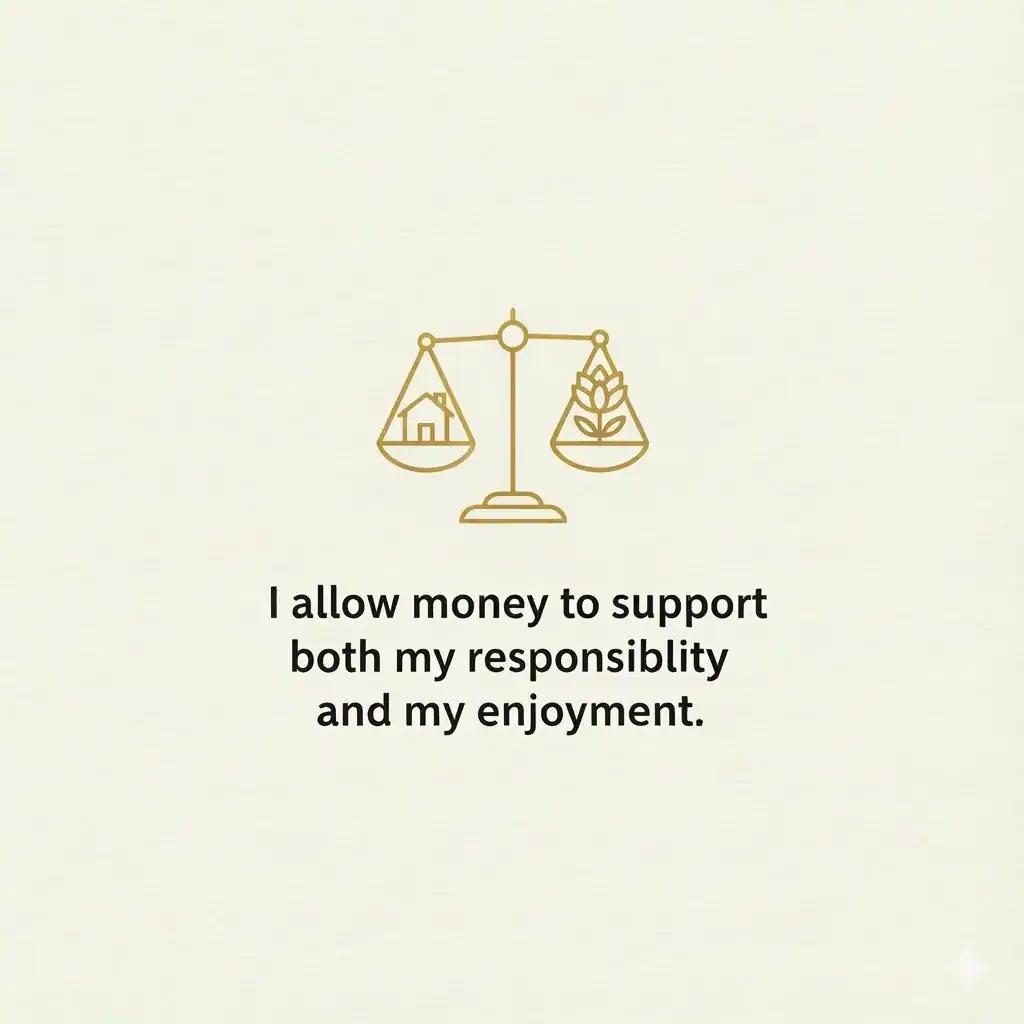
“I allow money to support both my responsibility and my enjoyment.”
Repeat this affirmation 21 times daily for 21 days.
This affirmation is not used to remove discipline.
It is used to stabilize a new internal reference point where structure and enjoyment coexist.
Possible Experiences While Healing Being Hard on Self With Money
You may notice reduced guilt around spending, easier transitions into rest, or moments of enjoyment without self criticism. Some days may feel softer, while others feel unchanged. These experiences are natural and reflect integration unfolding gradually.
Life After Healing Being Hard on Self That Blocks Enjoyment of Money
As this pattern integrates, money can be used with greater ease and balance. Enjoyment feels supportive rather than wasteful. Discipline becomes flexible instead of rigid.
Restoring Balance Beyond Control and Restraint
Balance is restored through repeated moments of allowing enjoyment without self judgment. Each gentle acknowledgment reinforces the truth that ease strengthens stability rather than undermines it.