
Healing Suppressed Anger
What Suppressed Anger Really Feels Like
Suppressed anger often feels like tension held quietly inside. Instead of clear irritation or expression, there may be tightness in the body, irritability without a clear reason, emotional numbness, or sudden emotional spikes after long restraint. Anger stays contained, turning inward rather than moving through.
Instead of release, there is pressure. The body carries what the voice did not feel safe to express.
How Suppressed Anger Develops Over Time
This pattern often develops when expressing anger once felt unsafe, unacceptable, or harmful. Boundaries may have been crossed while emotional expression was discouraged, punished, or ignored. In such environments, holding anger inside felt safer than risking conflict or loss of connection.
Over time, the nervous system learned to suppress anger to maintain safety or belonging. The emotion did not disappear, it remained stored within.
Signs of Suppressed Anger in Daily Life
• Chronic tension or tightness in the body.
• Irritability without obvious cause.
• Sudden emotional outbursts after long restraint.
• Difficulty identifying or expressing anger.
• Turning anger inward as self criticism.
A Gentle Healing Approach for Suppressed Anger
Healing suppressed anger begins by acknowledging that holding anger once protected you. There is no need to force expression or revisit conflict. Healing unfolds by allowing anger to be felt safely and released without harm.
As awareness grows, anger can return to its natural role as information rather than pressure.
Step 1: Grounding the Nervous System for Emotional Safety
Notice the present moment as it is.
Feel the natural rhythm of your breath.
Sense the surface supporting your body.
Allow awareness to rest gently.
Step 2: Anchoring the Experience of Suppressed Anger
Bring attention to where anger is held in the body.
It may appear as tightness, heat, heaviness, or pressure.
Notice its location, intensity, or stillness.
Allow the sensation to exist without pushing it away.
Step 3: Processing Subconscious Patterns Behind Suppression
Gently begin the following statement, either aloud or mentally.
Repeat the statement slowly and with awareness.
“I recognize my suppressed anger.”
Repeat this statement 21 times.
Remain observant.
Sensations, emotions, memories, or thoughts may arise.
There is nothing to analyze or fix.
Simply notice what surfaces and allow it to pass naturally.
Step 4: Clarifying Core Associations Linked to Anger Suppression
After completing the first round, ask yourself quietly.
Did expressing anger feel unsafe.
Did anger lead to conflict or rejection.
Did silence feel safer than expression.
Allow clarity to surface naturally, without forcing answers.
Once a specific association becomes clear, such as fear of confrontation, belief that anger is harmful, or habit of emotional restraint, continue with the recognition statements using that exact association.
Example:
“I recognize my association of anger with danger.”
Repeat 21 times.
“I recognize my association of expression with loss.”
Repeat 21 times.
Pause after each round.
Remain present with the breath and body.
Step 5: Integrating Safe Release of Anger
Once emotional neutrality, softening, or clarity is felt, gently introduce the integration affirmation.
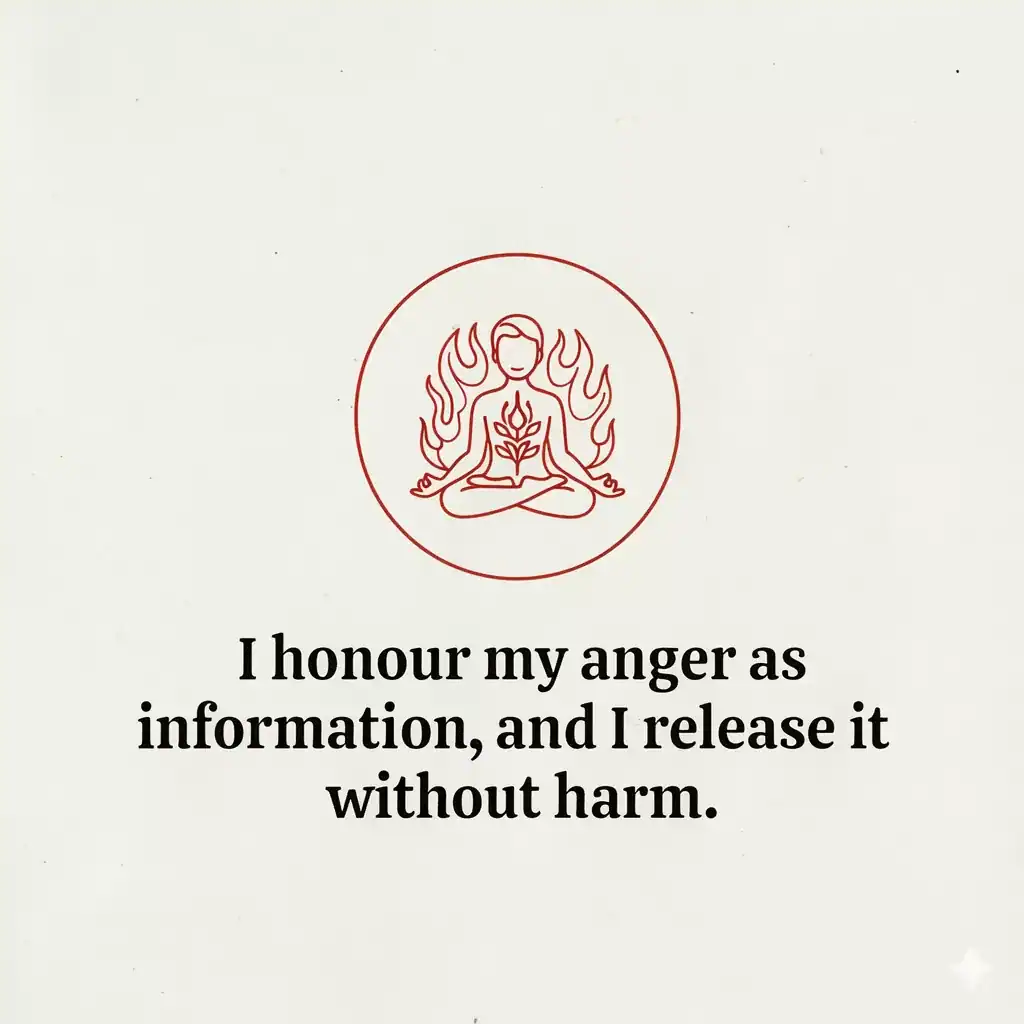
“I honor my anger as information, and I release it without harm.”
Repeat this affirmation 21 times daily for 21 days.
This affirmation is not used to justify reaction.
It is used to stabilize a new internal reference point where anger can move safely and completely.
Possible Experiences While Healing Suppressed Anger
You may notice emotional release, reduced tension, clearer boundaries, or increased calm. Some days may feel lighter, while others feel unchanged. These experiences are natural and reflect integration unfolding gradually.
Life After Healing Suppressed Anger
As this pattern integrates, anger becomes easier to recognize and express appropriately. Emotional spikes soften, and boundaries feel clearer. The body no longer needs to hold what can be safely acknowledged.
Restoring Balance Through Emotional Honesty
Balance is restored through repeated moments of allowing anger to be felt and released without suppression. Each gentle acknowledgment reinforces the truth that anger can move without causing harm.